User-centric, innovative, aesthetic, branded designs with collaborative approach with our partners is at the core of our process.
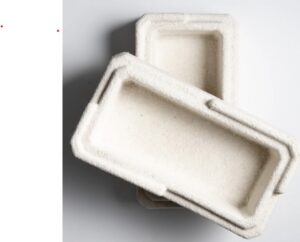
Our team will work closely with you from start to finish on your mycelium-based packaging product solution ensuring your specific requirements are met.
We provide services of branding, rapid prototyping and lab-testings for our mycelium-based packaging products.
If you’re a business or an organization looking for sustainable packaging options, mycelium based products offer a real solution that doesn’t compromise on performance. Contact us to know more about procuring or developing your mycelium product packaging.
What is the science behind mycelium packaging manufacturing process?
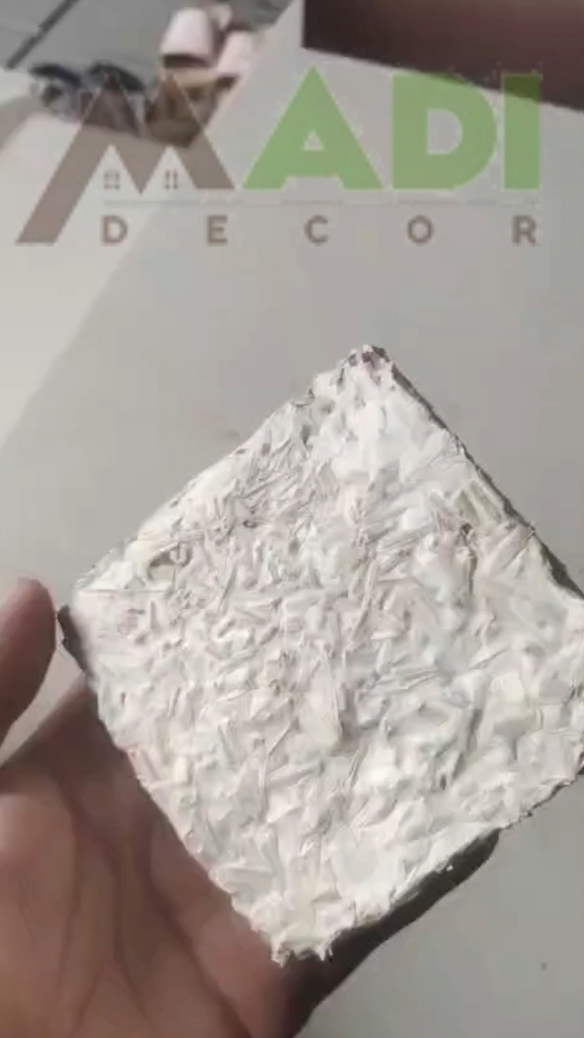
The mycelium packaging manufacturing process combines biology with industrial production methods. The production process transforms agricultural waste into protective packaging through controlled fungal growth.
Frequently Asked Questions (FAQ)
1. What is mycelium?
Mycelium is the underground network of thread-like structures that fungi use to grow, spread, and communicate – think of it as nature’s internet made of living fibers.
This wonderful sustainable material works as the underground foundation of forest ecosystems, from breaking down dead material, forming partnerships with tree roots, connecting plants to recycling nutrients.
Mycelium represents the hidden powerhouse of the fungal kingdom with its extensive root-like network that exists largely out of sight beneath the surface.
2.Are mycelium and fungi different or one and the same?
Think of mycelium as the main body of a fungus, similar to how roots, stems, and leaves make up the vegetative parts of a plant.
While we typically only see mushrooms popping up from the ground, mycelium is the true organism doing all the heavy lifting underground.
Mycelium network serves as the fungus’s feeding, growing, and reproductive system all rolled into one. Unlike plants that photosynthesize, fungi rely on their mycelium to break down organic matter and absorb nutrients directly from their environment.
The mycelium acts as both the digestive system and the circulatory system, distributing nutrients throughout the entire organism.
3. What is mycelium’s role in nature?
This vegetative mass secretes powerful enzymes that decompose dead plant material, fallen logs, and other organic debris, converting complex molecules into simpler compounds that other organisms can use. Without mycelium performing this essential function, forests would be buried under layers of undecomposed material.
4. How to distinguish mycelium from mushrooms?
Many people confuse mycelium with mushrooms, but they’re completely different parts of the same organism.
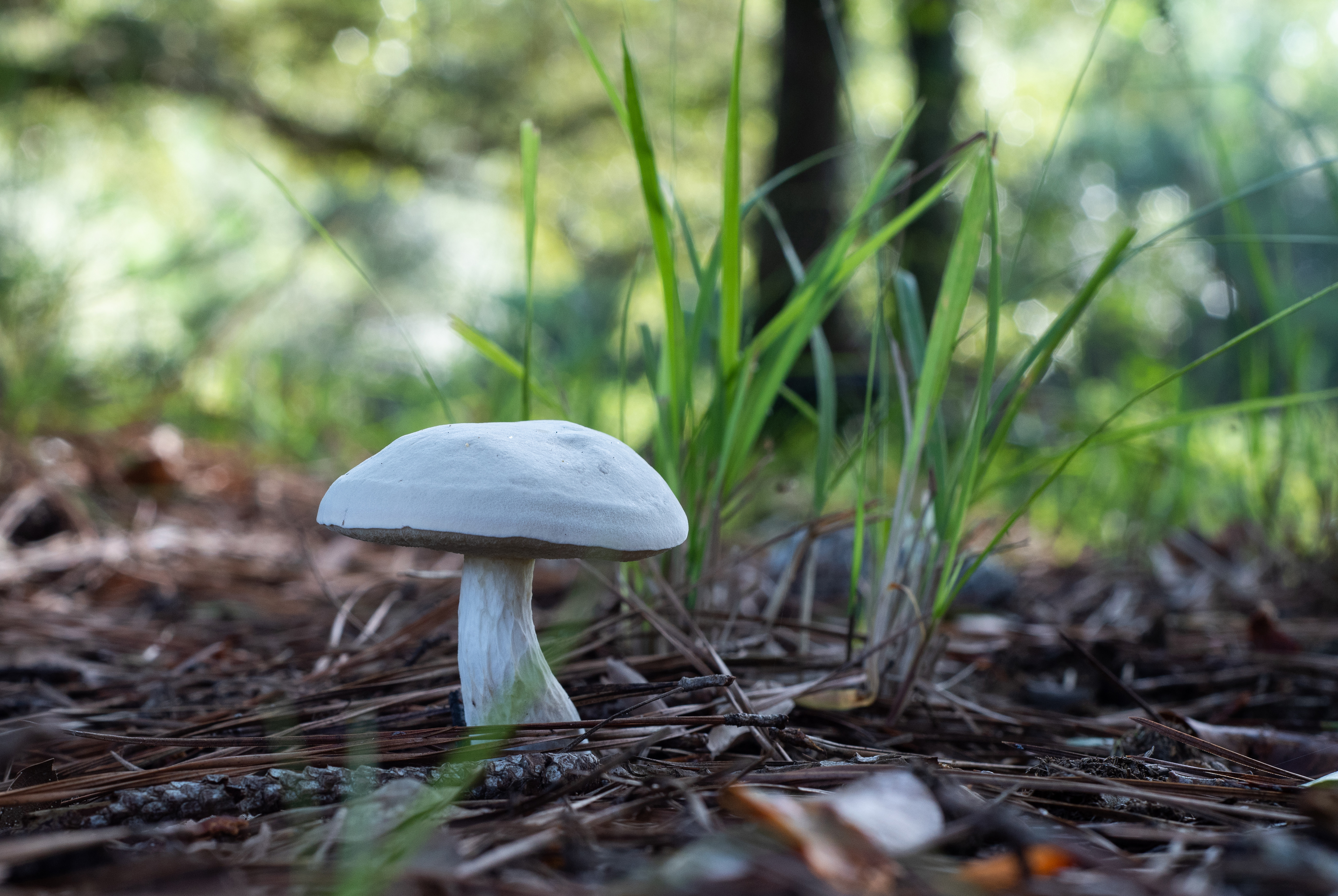
Mushrooms are actually just the reproductive structures – like flowers on a plant bearing spores- that emerge when conditions are right for spreading spores.
Spores are microscopic reproductive units produced by mushrooms and dispersed through wind, water, or animals to establish new mycelial colonies elsewhere.
Think of spores as seeds, mushrooms as flowers, and mycelium as the entire plant body. Each plays a different role in the fungal life cycle, but the mycelium remains the constant, living foundation that makes everything else possible.
The mushroom you see above ground might last only days or weeks, but the mycelium network below can persist for years, decades, or even centuries.
5. What are mycelium’s thread-like structures?
Mycelium consists of countless microscopic threads called hyphae, each thinner than a human hair. These individual strands branch and interconnect to create vast hyphal networks that can span acres underground.
An intricate underground web
A single cubic inch of soil might contain miles of these hyphal threads that connects trees, plants, and other organisms across entire forest ecosystems.
These hyphal networks demonstrate remarkable intelligence and adaptability. They can redirect growth toward nutrient sources, form partnerships with plant roots, and even communicate information about environmental threats across distances.
When you see fairy rings of mushrooms in a field or your yards, you’re actually witnessing the edge of an expanding underground mycelial network that might be decades old and covering several acres.
6. What are mycelium’s revolutionary properties?
Mycelium is fast evolving as a game-changing alternative to traditional non-sustainable materials.
This bio-based material breaks down completely in home compost bins within 30 days, unlike petroleum-based packaging that persists for centuries.
Mycelium Packagings
Madi Decor
as protective bubble wrap
as cushioning foam
easily biodegrates
as packaging fillers
in flexible packaging
custom-molded
food-safe
compostable packaging
plastic-free
biomediation for environmental cleanup projects
fire-resistant material
self-growing capability
used as insulating material
lightweight structures
structural building components like panels
Mycelium Packaging – Production Process Flow
Design
Raw material substrate selection
Achieving desired packaging shape
Inoculation
Growth
Dehydration
Heat Treatment
Finishing
Quality Check
Shipping
Total production time of molding, inoculation and growing ranges from 12-18 days, depending on the packaging thickness and environmental conditions.