


How to Win the War on Waste with Precycling?
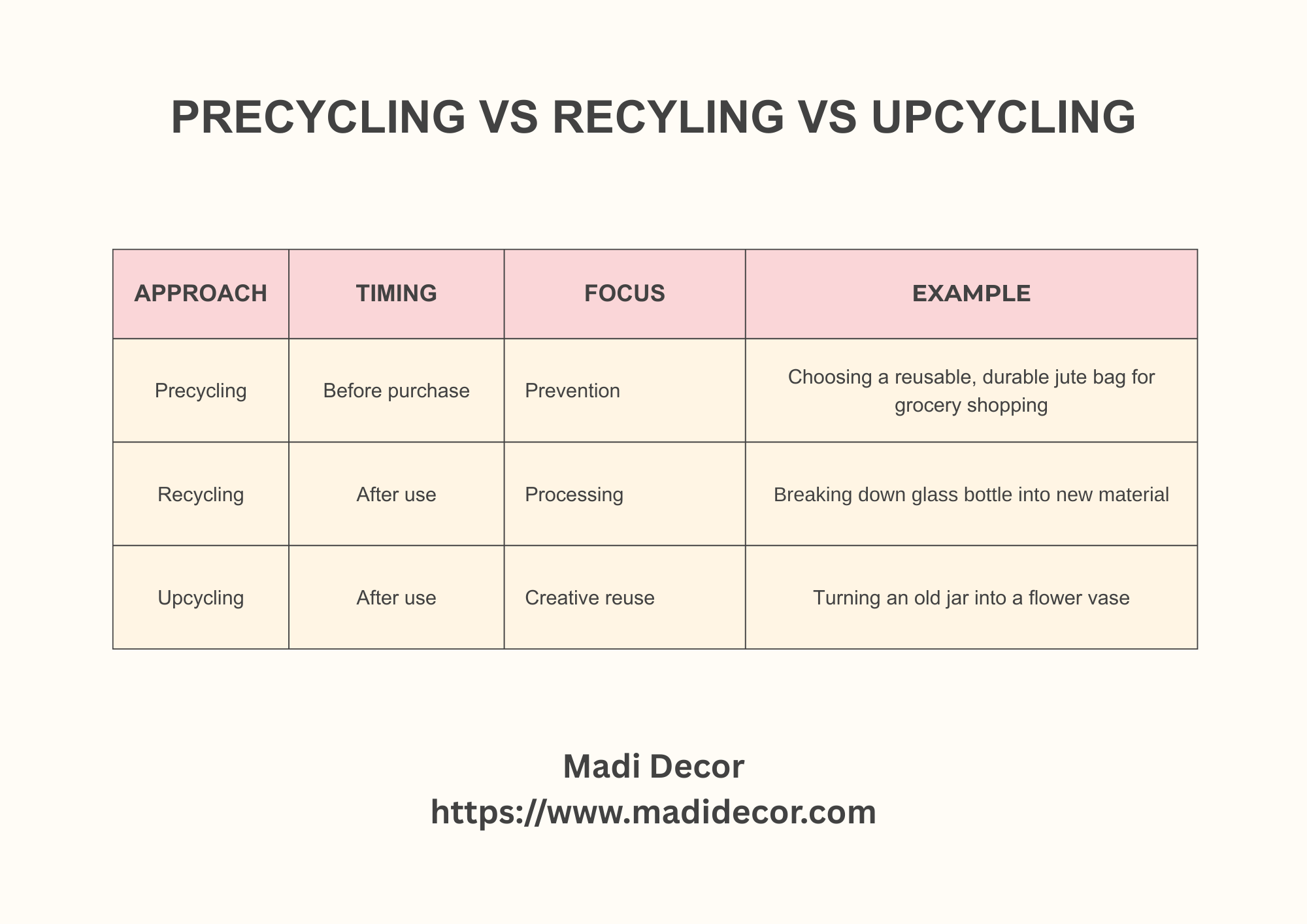
Precycling represents a proactive approach to waste management.
It is the practice of preventing waste before you even bring items into your home or workplace.
Unlike recycling, which deals with waste after it’s created, precycling focuses on making smarter choices upfront to avoid unnecessary packaging, single-use items, and products that quickly become trash.
What are the Core Principles of Precycling?
Three key actions embody the core principles of precycling:
- refusing unnecessary items,
- reducing consumption,
- and reusing what you already own
It is about low-waste life, one choice at a time.
Waste Not, Want Not: How Precycling Saves You Money?
Are you a conscious consumer wanting to save money while living more sustainably?
Don’t Wait, Precycle!
Ask these questions every time you make a purchase:
- Do I really need this?
- Can I find a better alternative with less packaging?
- Does this product serve multiple purposes?
- How about the item’s lifespan? Is it long, short or one-time?
- What happens when I’m done with it?
Precycling saves more than the planet—it saves you money, simplify your life, reduce clutter, lowers stress and sears conscience.
Making Precycling a Habit, Not a Chore
By encouraging investments in durable goods rather than disposable alternatives, one can put precycling into practice.
This mindset extends to every aspect of consumption, from choosing products with minimal packaging to selecting items made from sustainable materials.
Replace single-use items with reusable alternatives wherever possible.
Swap paper towels for washable cleaning cloths, disposable water bottles for a quality reusable bottle, and plastic bags with jute bags for sturdy shopping tote bags.
Small Steps, Big Impact with Precycling
Picture this:
when communities embrace precycling principles, they can reduce their waste streams by 30-40% without sacrificing quality of life. This translates to fewer garbage trucks on roads, reduced emissions from waste transport, and significantly less strain on already overburdened landfill systems.
And it supports businesses and brands in their manufacturing and packaging processes.
Why is Precycling More Important Than Recycling?
While recycling helps divert waste from landfills, it still requires energy, water, and transportation resources. The recycling process also faces limitations—many materials can only be recycled a limited number of times before losing quality.
Precycling stands apart by preventing waste generation entirely.
Rather than managing waste after it’s created, precycling eliminates the need for disposal, recycling, or upcycling by making smarter choices from the beginning. This approach saves the environment from pollution; it saves energy and resources typically required for waste processing.
Thinking Ahead: From Recycling to Precycling
The shift from recycling to precycling begins with awareness of your consumption patterns.
Start paying attention to what you throw away each week and trace those items back to their point of entry into your life. This exercise reveals opportunities to make different choices that would eliminate waste streams entirely and the need for recycling.
The Precycler’s Playbook
Begin questioning whether alternatives exist and seeking out reusable options.
Packaging accounts for nearly 30% of municipal solid waste, making it a prime target for precycling efforts. When packaging is necessary, prioritize items wrapped in recyclable materials like burlap fabric, cardboard, paper, or certain plastics clearly marked with recycling symbols.
Manufacturers should avoid products with excessive packaging layers, mixed materials that can’t be separated for recycling, or non-recyclable materials like styrofoam. Instead, they should opt for biodegradable fillers or layers, like mycelium packaging.
Many companies now offer refillable options for cleaning supplies, personal care products, and even food items. These systems dramatically reduce packaging waste over time while often providing cost savings.
Conclusion
Precycling is a smart move.
Precycling offers a simple yet powerful way to reduce waste before it even enters your home. By making thoughtful choices about what you buy, how it’s packaged, and where it comes from, you can dramatically cut down on the trash that ends up in landfills.
Every decision to refuse unnecessary packaging or choose a durable product over a disposable one creates a ripple effect that benefits both your wallet and the environment. The best part? You’ll quickly discover that precycling isn’t about giving up convenience – it’s about making smarter choices that work better for everyone.
For no-waste packaging, reusable products made sustainably with natural fiber materials, contact Madi Decor based in Los Angeles.