


The Growing Heat Crisis in Modern Cities
The heat problem today in modern cities is a serious issue that cannot be ignored. Rising temperatures are affecting everybody, not just those who work outdoors.
Extreme heat causes dehydration, heat exhaustion, heatstroke, and other life-threatening ailments.
Why Heat Management Matters ?
Demand for electricity has gone up as more people use air conditioners, putting pressure on power systems.
In addition, high temperatures damage crops, worsen droughts, and harm the environment in a domino way.
The Rising Heat Challenge
Heat centers like industrial plants, data centers, or agricultural setups are constantly battling rising temperatures. especially with the rapid growth of data centers and urbanization.
How Data Centers Contribute to Heat Generation
Data centers will be requiring large amounts of electricity to power AI servers and cooling systems, generating significant heat in the process.
Urbanization and the Urban Heat Island Effect
At the same time, expanding cities replace natural landscapes with heat-absorbing buildings, roads, and concrete, creating the urban heat island effect.
Effects on Human Health and Comfort
As heat waves become more intense with greater strain on power and water resources, communities are challenged to stay safe, conserve resources, and address the causes of climate warming.
The heat problem therefore is not just an inconvenience. It is a serious challenge that affects everyone.
Exploring Renewable Materials for Heat Control
It is essential to explore renewable natural materials as a means to address the growing threat of heat issues.
Several renewable materials such as wood, bamboo, jute, hemp and bio-based composites have better thermal properties that help reduce heat absorption.
These materials also improve building insulation, lower cooling demands, and decrease energy consumption.
Additionally, renewable materials generally produce fewer greenhouse gas emissions during their life cycle.
The Need for Sustainable Alternatives
Cities can reduce heat buildup, improve energy efficiency, and create more resilient urban environments by adopting renewable materials as they grow and expand their digital infrastructure.
One specific material to focus on would be jute insulation boards.
What Are Jute Insulation Boards?
Definition and Composition of Jute Insulation Board
Jute insulation boards, also known as jute panels, are materials made from renewable natural jute fibers.
The fibers are processed, compressed, and bonded into rigid or semi-rigid panels used for thermal and acoustic insulation.
The jute panels work by trapping air within the fibrous structure and slowing heat transfer. This helps keep buildings cooler in hot weather and warmer in cold weather, improving overall energy efficiency.
Compared to synthetic insulation materials like polystyrene or polyurethane, jute insulation boards are environmentally friendly. Jute boards are biodegradable, renewable, and require less energy to produce.
Impact on Energy Consumption
Often used in walls, ceilings, and sometimes as partitions or on floors as part of green building designs, the purpose is aimed at reducing heat and improving indoor comfort.
Jute insulation panels will be incredibly impactful and effective in lowering energy consumption. This addresses heat-related challenges in data-driven infrastructure environments and urbanized centers.
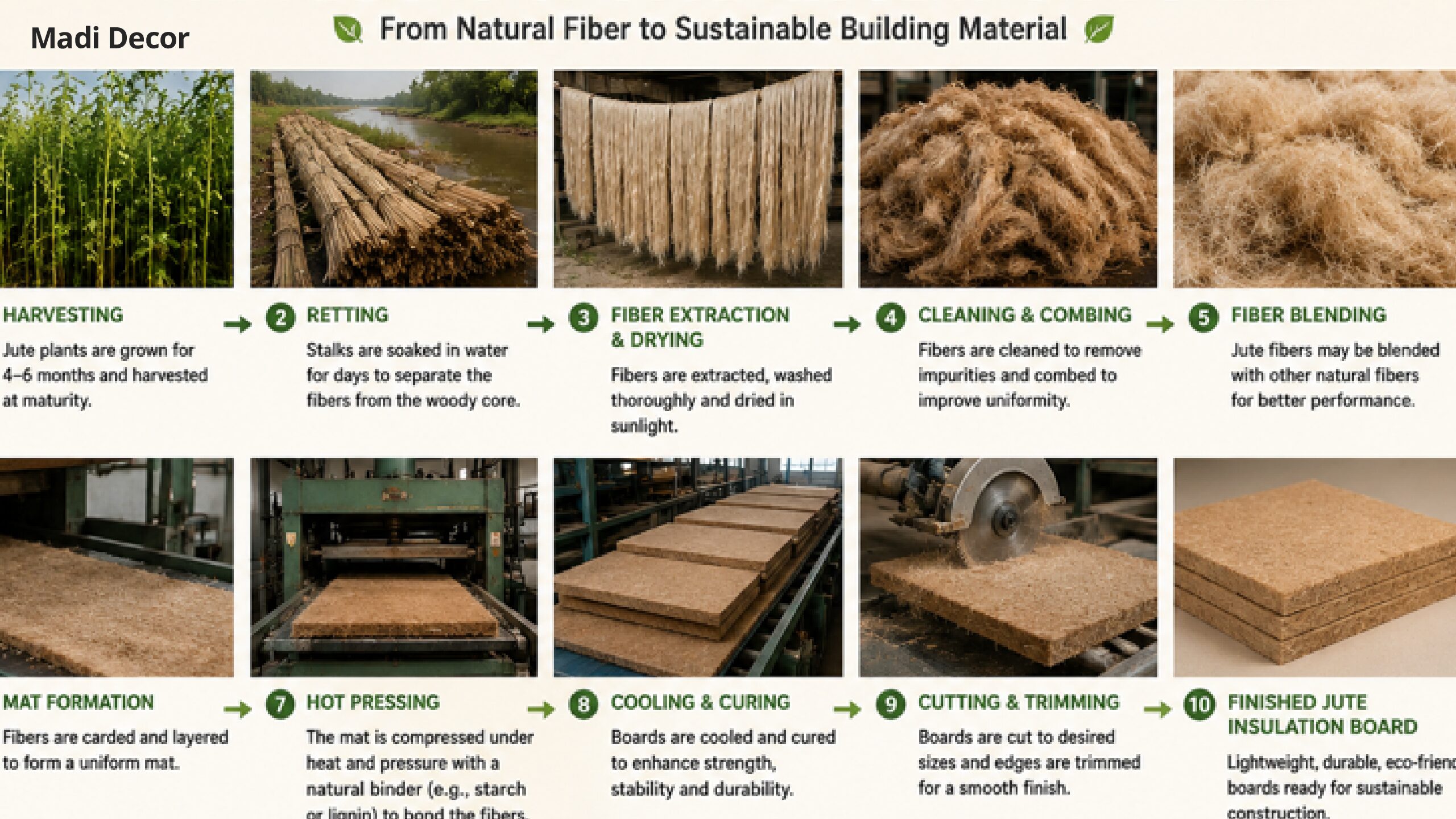
How Jute Insulation Boards Are Made ?
The manufacturing process of jute insulation board is straight-forward.
Raw jute fibers are compressed into dense, structured panels through a series of mechanical and sometimes thermal processes.
Dried, cleaned jute fibers are carded and layered to form a uniform mat. This mat is then compressed under pressure, subjected to heat, which helps bind the fibers together into a solid board structure.
The board is then cut to size. It may undergo additional finishing to improve moisture resistance and stability.
The final product is a lightweight, breathable insulation material that is biodegradable and suitable for sustainable application.
Case Study: Understanding Cooling Challenges of AI Data Centers
As the demand for cloud computing, artificial intelligence, and digital services continues to grow, data centers are becoming larger and more powerful. However, one of the biggest challenges they face is managing the enormous amount of heat generated by thousands of servers operating continuously.
If this heat is not effectively removed, equipment performance can decline, system failures may occur, and operational costs can increase significantly.
Why Traditional Cooling Solutions Are No Longer Enough
Traditional cooling methods such as air conditioning and mechanical ventilation consume large amounts of electricity and water.
In regions experiencing higher temperatures due to climate change and urban heat island effects, cooling systems must work even harder, further increasing energy consumption and carbon emissions.
Additionally, some advanced cooling technologies require significant amounts of water and energy, creating concerns about water scarcity and sustainability.
Challenges for Sustainable Urban Development
As data centers continue to expand, these cooling challenges highlight the need for innovative and sustainable solutions. Improved building designs, energy-efficient cooling technologies, and the use of renewable insulation materials such as jute boards can help reduce heat transfer, lower cooling demands, and improve overall energy efficiency.
Addressing these challenges is essential for creating more sustainable digital infrastructure while meeting the world’s growing demand for data processing and storage.
Why Jute Is the Perfect Bio Material for Heat Management ?
Key Properties of Jute Insulation Boards
Jute is an excellent material for heat management because of its natural insulating properties, sustainability, and low environmental impact.
Moisture Regulation and Indoor Comfort
Jute fibers contain numerous microscopic air pockets that reduce heat transfer, helping to maintain stable indoor temperatures. This makes jute-based insulation boards effective at keeping heat out during hot weather and reducing the need for energy-intensive cooling systems.
Applications in Buildings and Infrastructure
In urban areas and data center facilities, where excessive heat generation is a growing concern, jute insulation can help improve thermal efficiency by minimizing the amount of external heat entering buildings.
By reducing heat gain, cooling systems do not have to work as hard, leading to lower energy consumption and operating costs. This is particularly important for data centers, where cooling can account for a significant portion of total electricity use.
Renewable Materials and Climate Resilience
Jute is a renewable and biodegradable natural fiber that absorbs carbon dioxide during its growth.
Unlike many conventional insulation materials derived from petrochemicals, jute has a lower carbon footprint and can be produced with relatively little energy.
Its sustainability, combined with its ability to improve energy efficiency, makes jute an attractive solution for addressing heat-related challenges in modern cities and digital infrastructure.
As the world seeks greener ways to manage rising temperatures and support energy-efficient digital infrastructure, jute offers a practical and environmentally responsible alternative for sustainable heat management.
Real World Success Stories
There are several real-world examples showing how jute insulation can successfully improve thermal performance and sustainability.
- Affordable Housing and Green Buildings in India
India has seen jute-based composite boards used in sustainable construction projects. These boards have been incorporated into walls to reduce indoor temperatures and improve thermal comfort in hot climates.
-
Eco-Friendly Building Projects in Europe
Several green building projects in countries such as Germany and France have adopted natural-fiber insulation materials, including jute, hemp, and flax.
-
Jute-Based Panels for Retrofitting Buildings
Researchers and manufacturers such as Madi Décor a USA based company, in collaboration with international partners, have developed jute fiber insulation panels and provided as samples for pilot projects.
Conclusion
The Role of Jute in a Sustainable Future
Can renewable natural materials like Jute help solve the world’s growing heat problem?
Jute insulation boards demonstrate that sustainable, renewable solutions can play an important role in creating cooler buildings, reducing energy consumption, and supporting climate-resilient cities for the future.
Potential Applications of Jute-Based Insulation Boards in AI Data Centers
Although commercial data centers have not yet widely adopted jute insulation boards, the industry is increasingly exploring bio-based materials to reduce costs and improve sustainability.
The success of natural-fiber insulation in commercial and residential domains suggests that jute boards play a pivotal role in future energy-efficient data center designs.
This is true particularly in buildings, walls, equipment enclosures, rooftops, and non-critical thermal barriers where reducing cooling loads is important.
Smart, Sustainable, Renewable Natural Solution to Address Heat Challenge
Jute is not just an environmentally friendly material—it is a practical solution that has already proven capable of improving thermal performance and reducing energy use in real-world applications.
As cities expand and data centers consume more energy, jute insulation boards offer a promising pathway toward more sustainable heat management.